Total Hip Replacement: What is actually replaced?
Dr. Patrick D. Brooks
10/16/2026
What Is a Hip Replacement?
Hip replacement is one of the most successful surgery in all surgical fields performed today. For patients with severe hip arthritis, a hip replacement can reduce pain, improve mobility, and help them return to activities that have become difficult.
But what exactly is replaced during a hip replacement?
Understanding the Hip Joint
The hip is a ball-and-socket joint. The ball, called the femoral head, is located at the top of the thigh bone (femur). It fits into a socket in the pelvis called the acetabulum.
In a healthy hip, both surfaces are covered with smooth cartilage that allows the joint to move with very little friction.
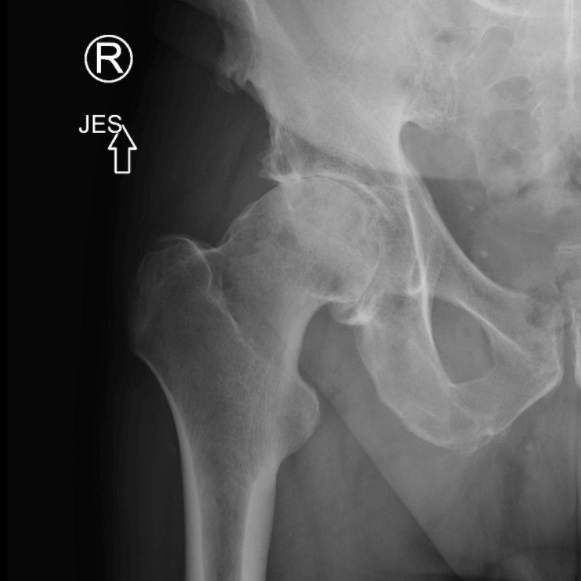
With hip arthritis, this cartilage gradually wears away. As the protective cartilage is lost, the joint surfaces can become rough and painful. Patients may develop pain in the groin, thigh, or buttock, along with stiffness and difficulty walking.
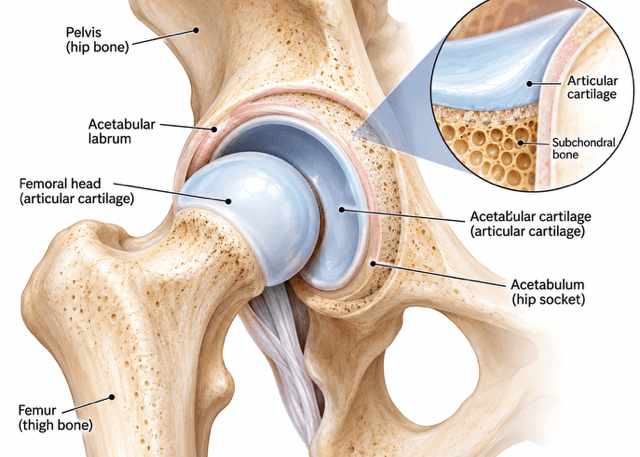&srotate=0)
Hip Anatomy
What Happens During a Hip Replacement?
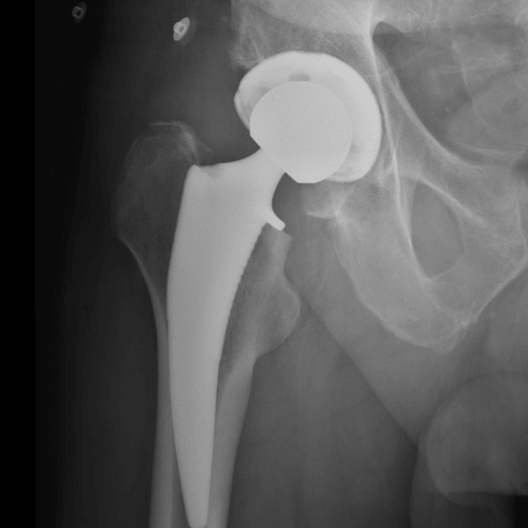
Despite the name, a total hip replacement does not replace the entire hip. Instead, the damaged surfaces of the hip joint are removed and replaced with artificial components.
The Steps of Surgery:
- 1st Step - The damaged femoral head is cut off and removed
- 2nd Step - The damaged cartilage in the hip socket is reamed out down to healthy bone for the cup to grow into
- 3rd Step - A metal cup is placed into the pelvis - this is made of titanium. Sometimes screws are added to the cup at the discretion of the surgeon.
- 4th Step - A specialized liner is placed inside the cup, creating a smooth surface for the new hip to move against. This liner is made of high-grade plastic.
- 5th Step - A metal stem is placed into the femur - this is also made of titanium
- Last Step - A new ball, typically made of ceramic, is attached to the top of the stem.
Together, these components recreate the ball-and-socket joint and allow the hip to move smoothly again.
Lets Go Through Each of these Steps:
Step 1 - Femoral Head Removal
- After the hip joint is exposed, the cut for the femoral head is marked typically at a preset level based on our preoperative templating. A reciprocating saw is used to cut the bone. A corkscrew is driven into the ball or a clamp is used to then remove the ball from the socket.
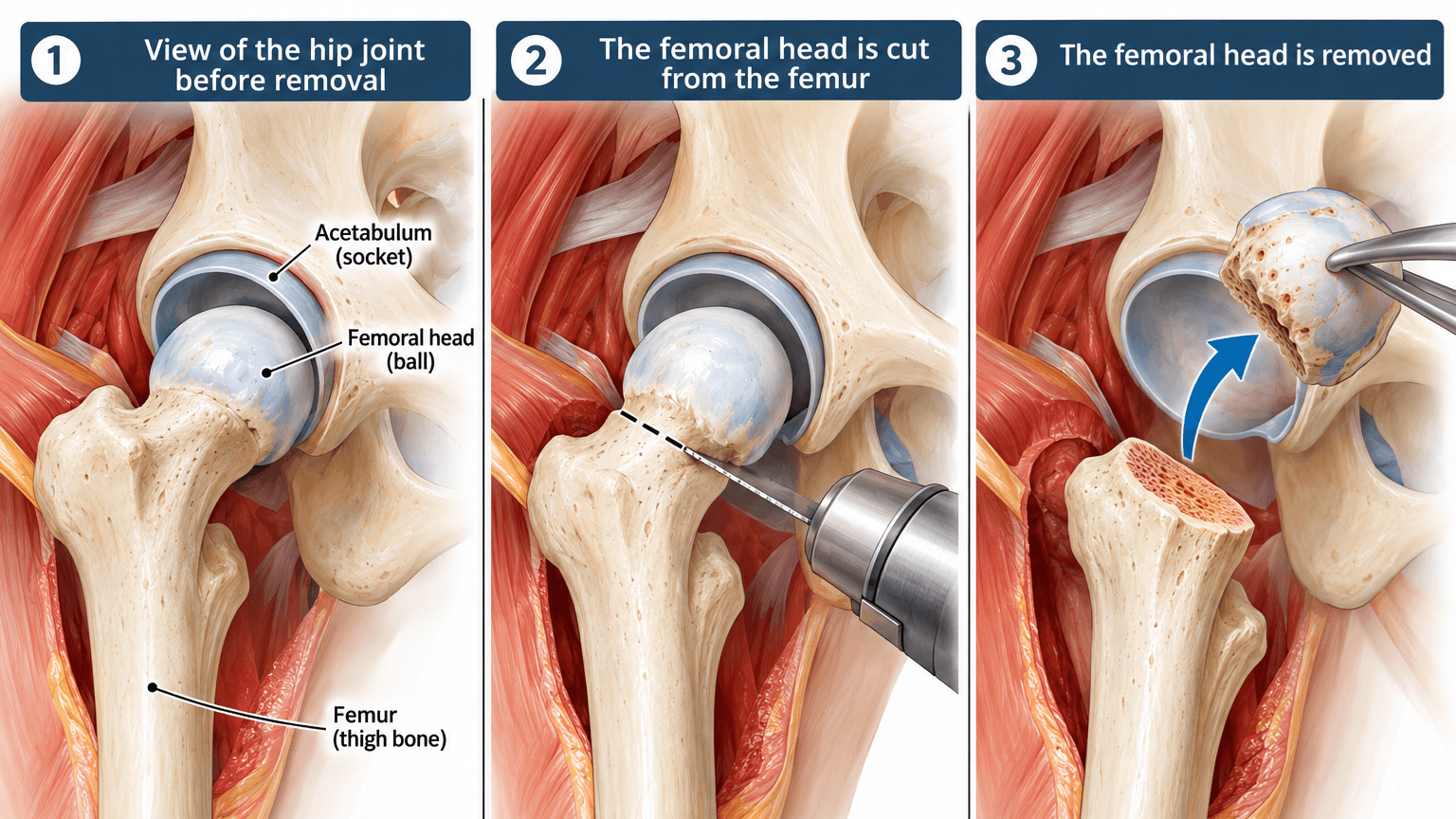&srotate=0)
1st Step - Cut and Remove Femoral Head
&srotate=0)
Femoral Head Removed
Step 2 - Reaming the Acetabular Cartilage
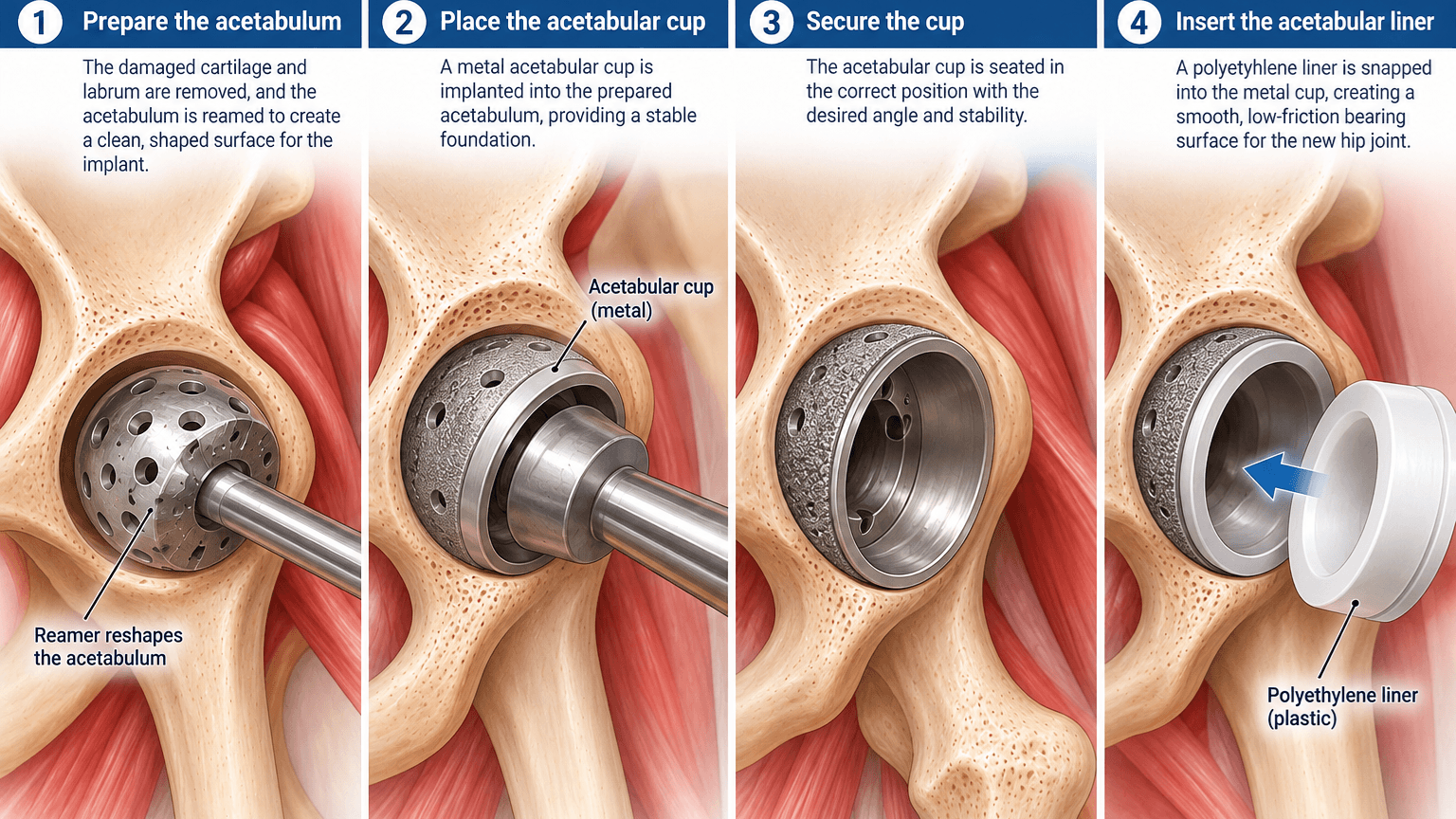
- Using a cheese grater type device that is hemispherical, the worn acetabular cartilage is reamed away to get down to healthy, bleeding bone that will accommodate the metal acetabular shell. These hemispherical reamers are then sequentially increased in diameter by millimeters until the right fit is achieved. We again typically have a templated size from preoperative planning to help guide our size.
This xray below shows the device and how we use xray to make sure we are reaming in the appropriate position and size.
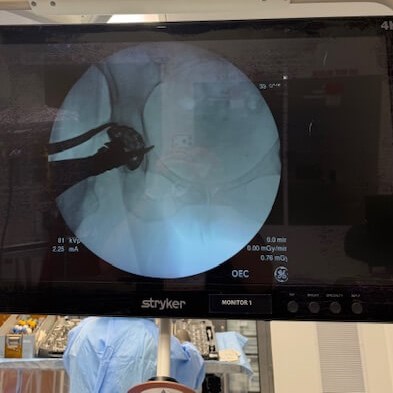&srotate=0)
2nd Step - Reaming the Cup Cartilage
Steps 3 and 4 -
- Next after the reaming, we place the titanium cup based on the size of the reamer we used. This is impacted into place and gets a good grip into the bony surface. Sometimes screws are placed through holes into the cup for added fixation. There are pores on the shell for the bone to grow into over the next several months. A specialized plastic liner is secured on the inside of the cup next. This is what the ceramic ball will glide and rotate against.
&srotate=0)
Steps 2-4 - Reaming/Placing the Acetabular Cup and Plastic Liner
Step 5 - Placing the femoral stem
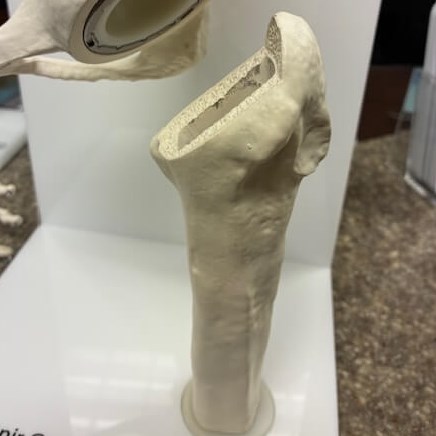
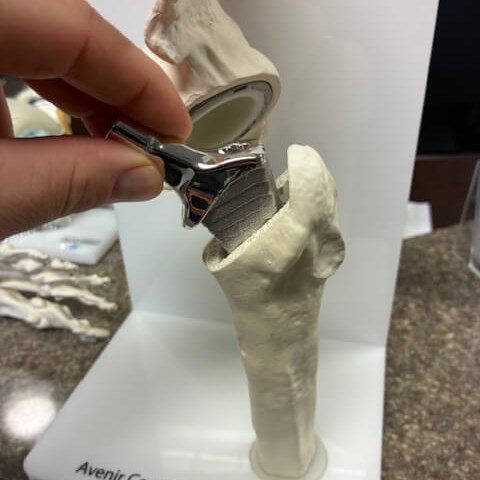
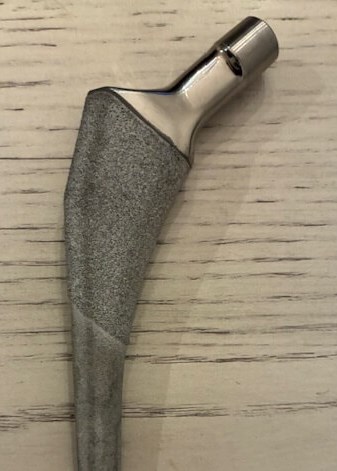
- Next we move onto the thigh bone, the femur. We gain entry into the inner part of the bone called the canal through specialized devices. We progressively increase sizes of what are called broaches. These are similar in shape to the final prosthesis and clear away the bone to prepare for the implant. Once we like the size, the final stem is impacted into the bone of the femur. Again this is titanium and has pores on the surface of the implant for the bone to grow into.
&srotate=0)
Step 5 - Placing Stem
&srotate=0)
Real Stem
Step 6 - Placing the Ceramic Ball
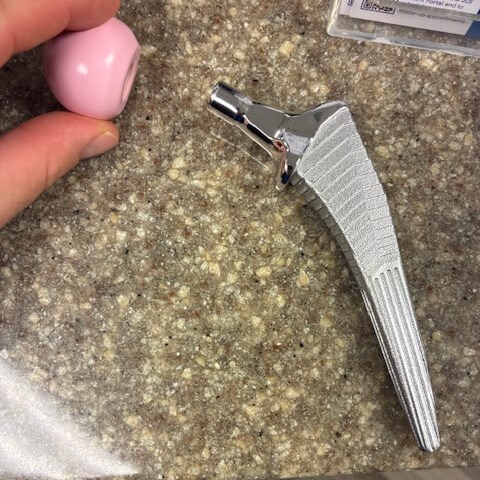
- The last step, we impact the ceramic ball onto the neck of the femoral stem. Ceramic is chosen for its smooth and durable composition. Different sizes can be used and match the inner size of the plastic liner on the cup. Once the ball is impacted, the hip is then put into place and we test several maneuvers to make sure the hip doesn't dislocate, or the ball disengage from the cup.
&srotate=0)
Step 6 - Impacting the Ball
Who May Benefit From Hip Replacement?
Hip replacement is generally considered when hip arthritis begins to significantly interfere with a patient's quality of life despite nonsurgical treatment.
Common symptoms include:
- Persistent groin or hip pain
- Pain while walking or standing
- Difficulty putting on shoes and socks
- Difficulty getting in and out of a car
- Loss of hip motion
- Pain that interferes with sleep
- Difficulty participating in exercise, work, or recreational activities
Before considering surgery, many patients try treatments such as activity modification, anti-inflammatory medications, physical therapy, weight management, and injections.
What Is the Goal of Hip Replacement?
The primary goal of hip replacement is simple: reduce pain and restore function.
For someone whose life has become increasingly limited by hip arthritis, a successful hip replacement can make everyday activities—walking, exercising, traveling, working, or simply putting on a pair of shoes—much easier.
If you are in Jacksonville or the Northeast Florida region, it may be worth discussing if this is an option for you.
This information is intended for general educational purposes and is not a substitute for an individualized evaluation or medical advice.
&srotate=0)
Severe Hip Arthritis
&srotate=0)
Total Hip Replacement
Recent Posts
Total Knee Replacement: To Use Cement or Not
This blog focuses on the options and indications regarding cement use in a knee replacement
Activities After Total Hip or Knee Replacement: What can I expect?
This blog focuses on what activities patients can expect to get back to after total hip or total knee replacement
Direct Anterior Hip Replacement: What is it?
Discussion on the direct anterior approach for total hip replacement including what it is and why it is becoming so popular