Direct Anterior Hip Replacement: What is it?
Dr. Patrick D. Brooks
10/17/2026
Anterior Hip Replacement
Total hip replacement is one of the most successful procedures in orthopedic surgery, helping patients with advanced hip arthritis reduce pain and return to an active lifestyle. Over the past several years, the anterior approach to hip replacement has become increasingly popular because it allows the surgeon to access the hip from the front while working between muscles rather than routinely cutting through major muscle groups.
We will discuss what the approach actually is and what are the benefits as well as some of the risks associated with it.
What Is the Anterior Approach?
During a traditional direct anterior hip replacement, the surgeon reaches the hip joint from the front of the body. The approach uses an interval between muscles to access the hip joint. Other approaches to the hip require cutting through muscles or release tendons and other soft tissue off of the hip.
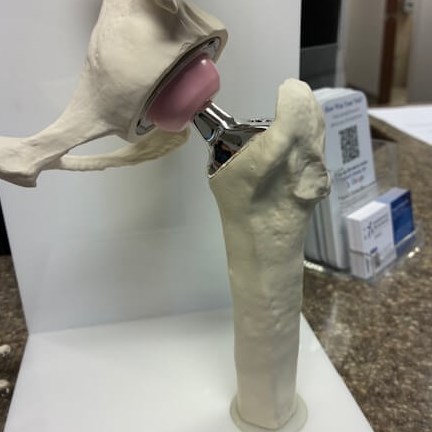
Once the hip is exposed, the damaged femoral head is removed and the arthritic portions of the hip are replaced with a new acetabular cup, liner, femoral head, and femoral stem.
One potential advantage of this approach is that the muscles surrounding the hip can often be preserved. This may contribute to early mobility and recovery for appropriately selected patients. The studies suggest that anterior hip replacement likely has a less painful earlier recovery in the first 6 weeks, but at 3 months and beyond there is largely no difference.
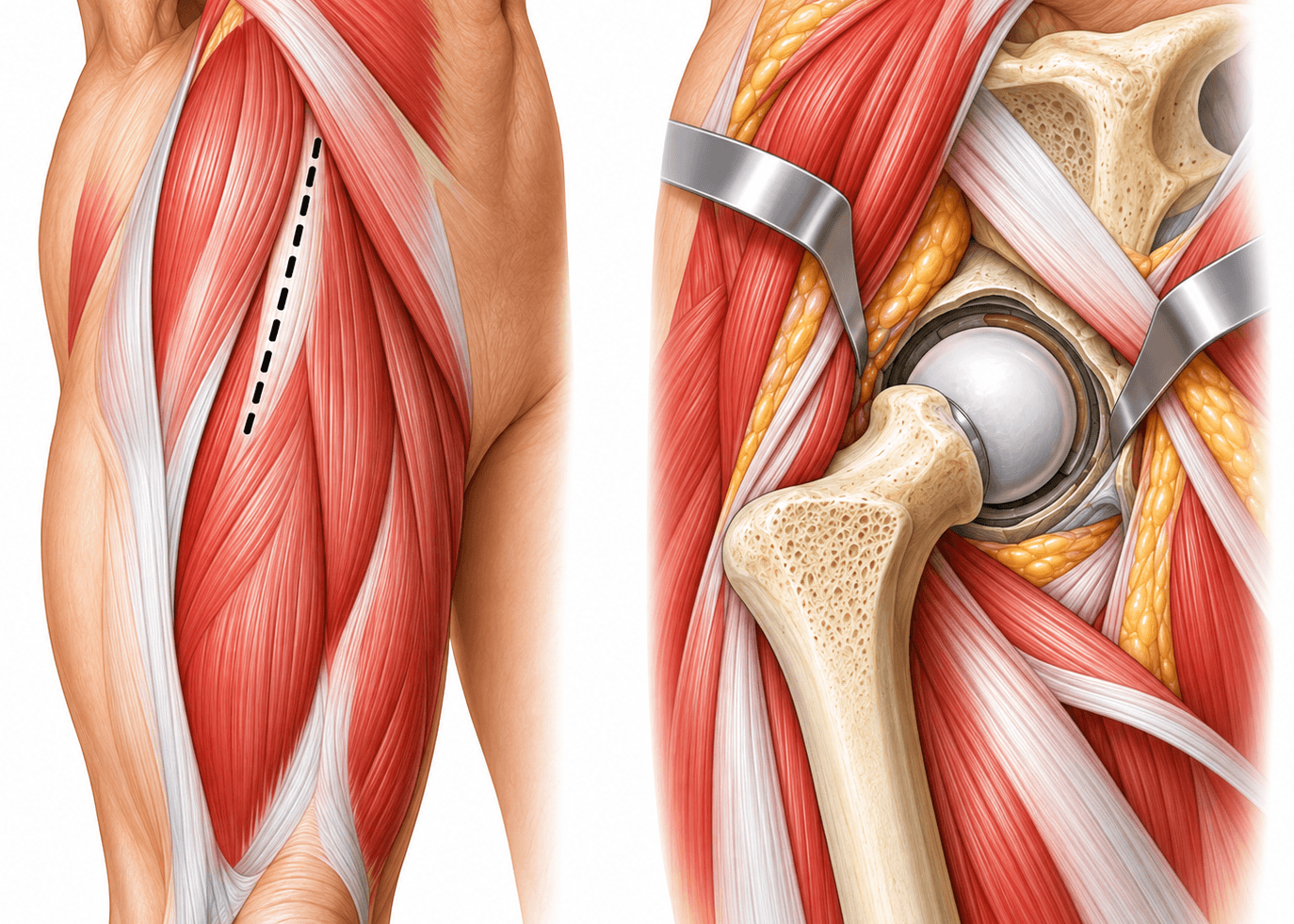&srotate=0)
Anterior Hip Anatomy
Supine Anterior Hip Replacement
For the anterior approach, the patient is typically lying flat on his or her back, known as the supine position.
The procedure may be performed on a specialized orthopedic table or on a standard operating-room table. For the specialized table, your feet are placed into specialized boots - very similar to ski boots.
The incision is generally placed on the front or slightly toward the outside of the upper thigh near the hip. Through this incision, the surgeon develops the interval between the muscles and reaches the hip joint.
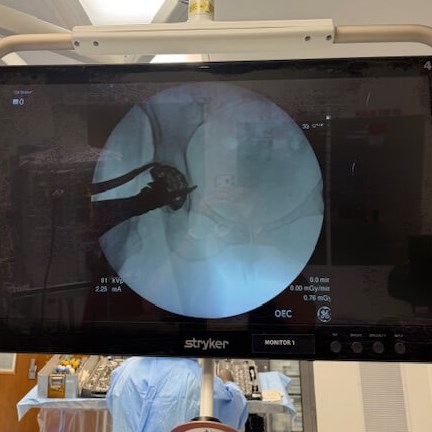
The supine position also makes it convenient to use intraoperative X-rays or fluoroscopy. These images can help the surgeon evaluate factors such as implant position, leg length, and component alignment during the procedure. Newer technology can calculate these parameters automatically and accurately as well as use AI-assistance
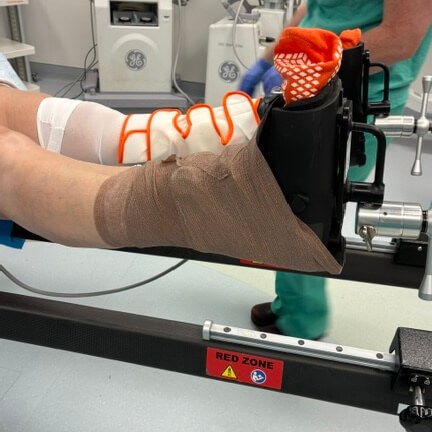&srotate=0)
Anterior Hip Boots
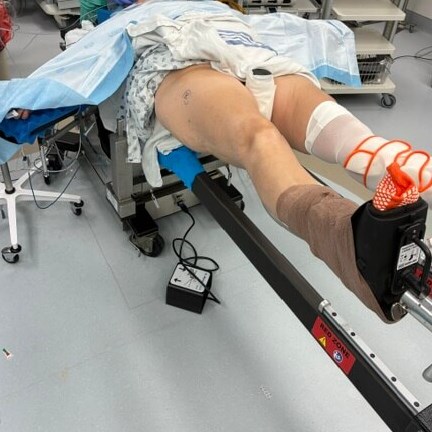&srotate=0)
Hanna Table Setup (Patient consent received to use image)
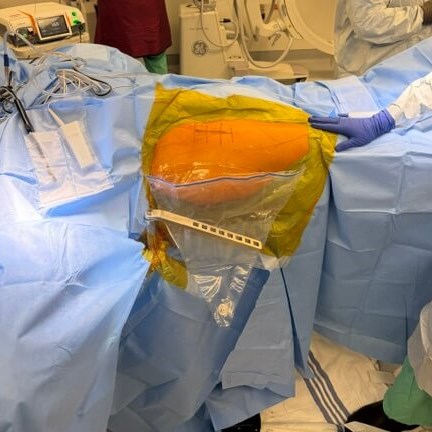&srotate=0)
Anterior Hip Drape Setup
&srotate=0)
Using Xray during Anterior Hip Replacement
Traditional Anterior vs. Bikini Incision
One variation involves the orientation of the skin incision.
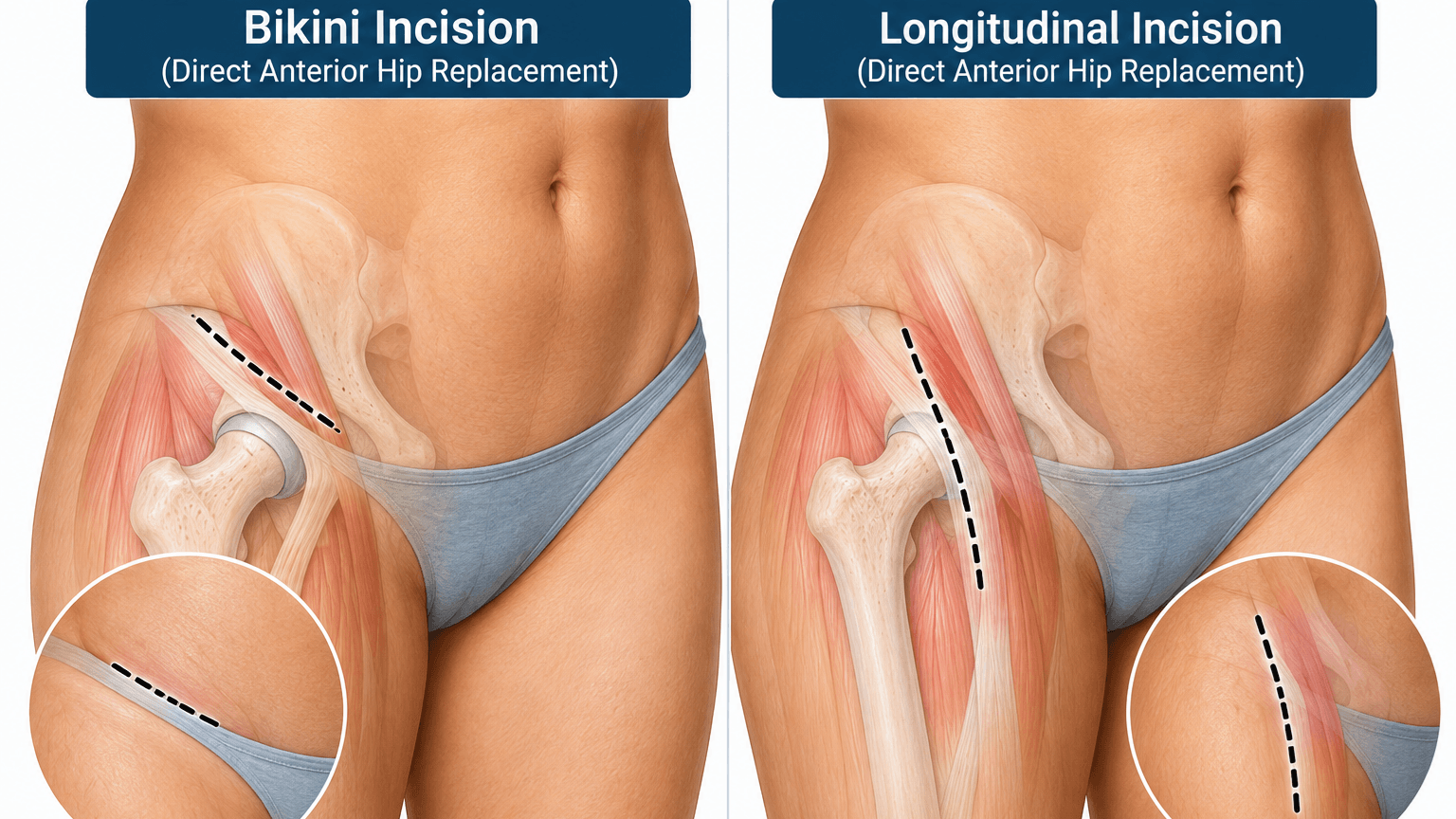
The traditional anterior incision typically runs more vertically or slightly obliquely along the front and outer portion of the upper thigh.
A bikini incision uses a more transverse or horizontal incision that follows the natural skin crease near the front of the hip. The deeper surgical approach to the hip may be similar, but the skin incision is oriented differently.
For some patients, the bikini incision can provide a scar that is less noticeable because it follows a natural skin crease and may be more easily concealed by clothing.
However, the best incision is not determined by appearance alone. Body habitus, skin folds, anatomy, previous surgery, surgical exposure, and wound-healing considerations can all influence incision selection.
&srotate=0)
Bikini Vs. Traditional (Longitudinal) Incision
Does One Technique Provide a Better Hip Replacement?
The goal of hip replacement is not simply to create the smallest or least visible incision. The primary goals are to relieve pain, restore function, accurately position the implants, and provide a durable hip replacement.
Different tables, retractors, incisions, and implants are different tools a surgeon may use to accomplish those goals.
The most appropriate technique depends on several factors, including:
- The patient's anatomy and body habitus
- The severity and pattern of hip arthritis or deformity
- Previous surgery or existing scars
- Implant selection
- Surgeon experience and preferred technique
- The need for additional surgical exposure
What About Recovery?
Many patients undergoing anterior hip replacement are able to stand and begin walking shortly after surgery. Depending on their overall health, home support, and progress after surgery, about 80% of patients are candidates for same day discharge home after surgery.
Recovery varies from person to person. While the surgical approach can influence early recovery, other factors—including preoperative strength, overall health, age, activity level, and the complexity of the operation—are also important.
The Bottom Line
The approach is not the main determinant of the outcome after hip replacement. The anterior approach is an option and likely appropriate for most patients and may help with an early recovery but long term does not influence the outcomes at this time. Many factors go into the decision of what approach to use and if you have altered anatomy, hardware, or old incisions this may change what is offered. The goal is to long term improve your quality of life and function which the vast majority of time a hip replacement will do regardless of how you access the joint.
If hip arthritis is limiting your ability to walk, exercise, work, or enjoy everyday activities and you are in the Jacksonville area, an evaluation with a hip replacement specialist can help determine whether nonsurgical treatment or hip replacement is the appropriate next step.
&srotate=0)
Total Hip Replacement
Recent Posts
Total Knee Replacement: To Use Cement or Not
This blog focuses on the options and indications regarding cement use in a knee replacement
Activities After Total Hip or Knee Replacement: What can I expect?
This blog focuses on what activities patients can expect to get back to after total hip or total knee replacement
Direct Anterior Hip Replacement: What is it?
Discussion on the direct anterior approach for total hip replacement including what it is and why it is becoming so popular